
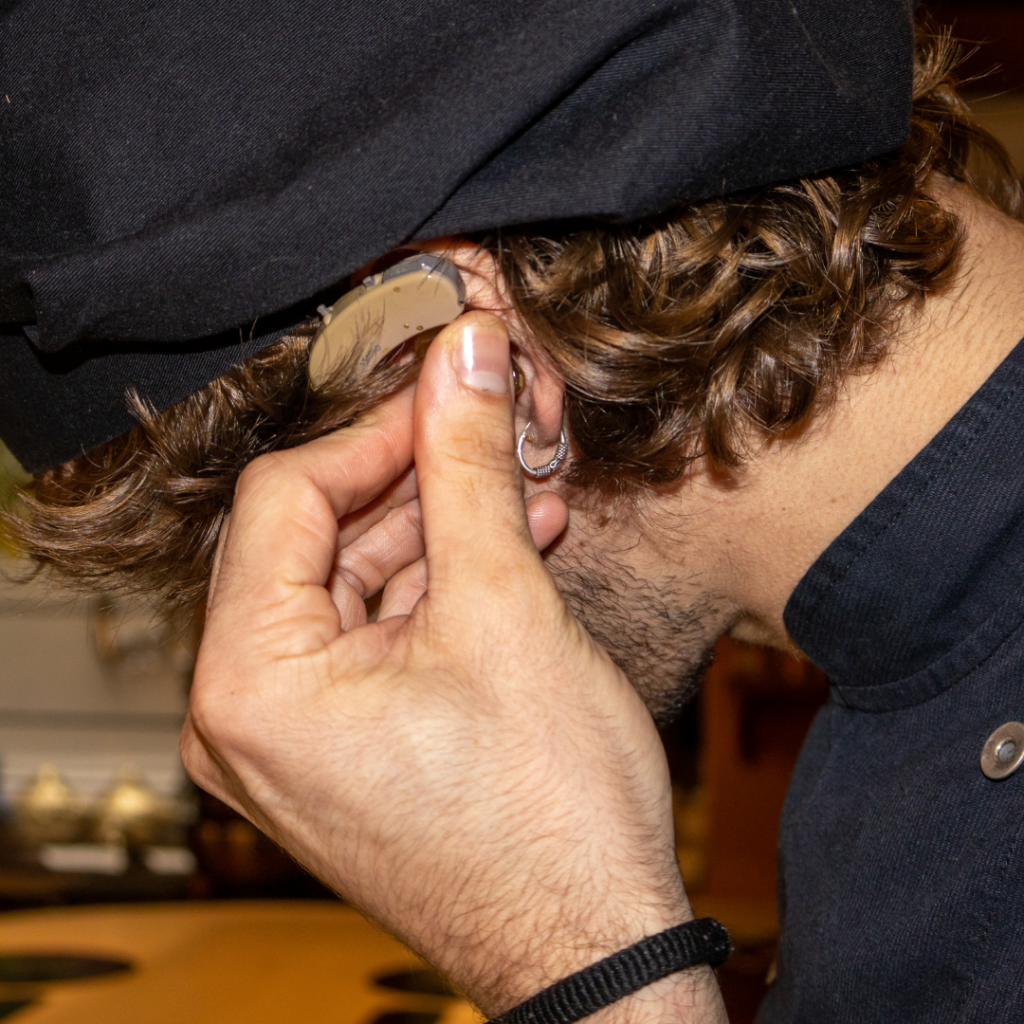
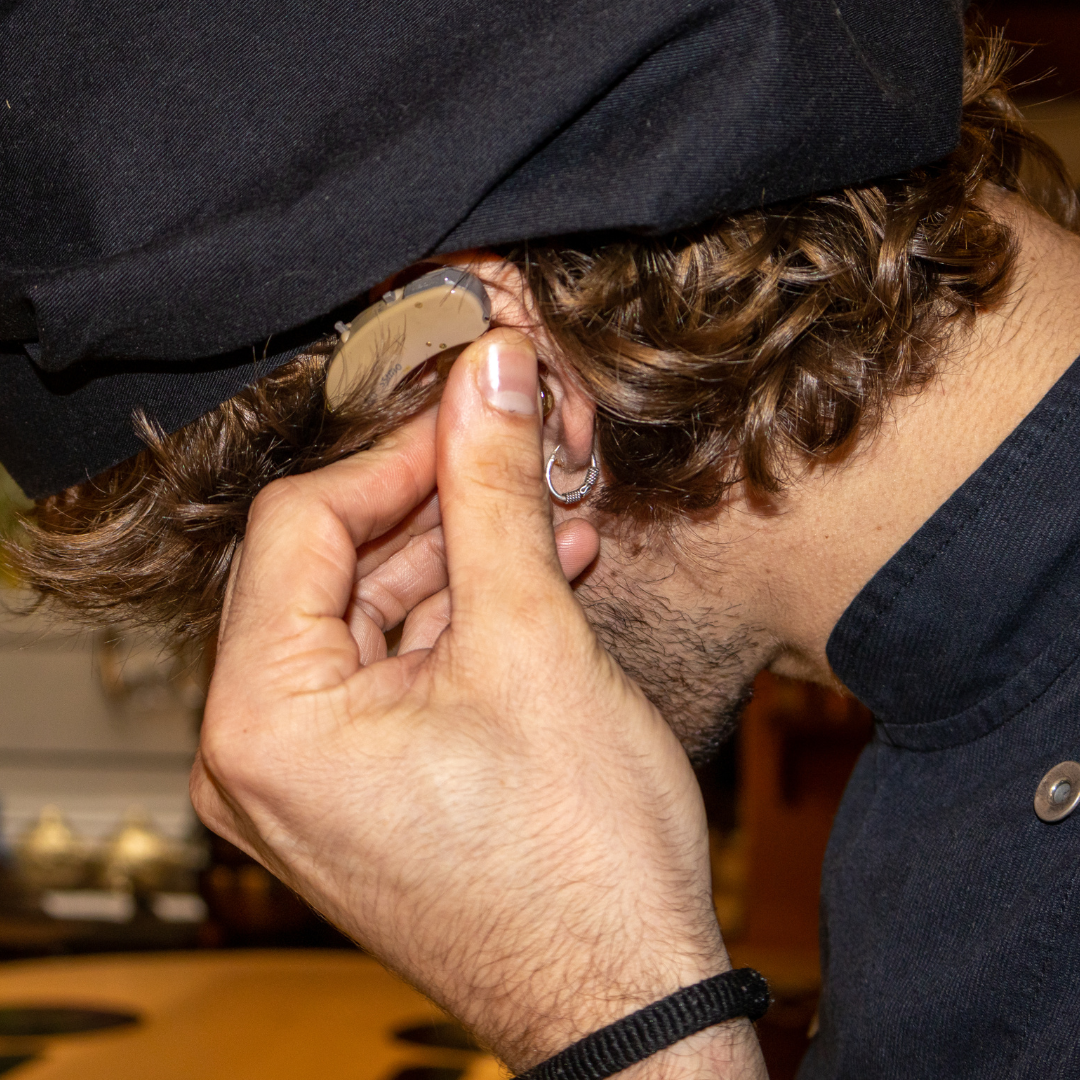
Maintaining dinner dialogue proves demanding when chaotic ambient noise strains your concentration and hearing. Our practice provides targeted diagnostics to evaluate hearing in quiet atmospheres as well as complex noise environments. After uncovering the precise factors driving your difficult hearing, our team helps you select individualized auditory solutions.
Explaining Normal Quiet Hearing Versus Restaurant Listening Fatigue
Quiet rooms provide a favorable signal-to-noise ratio, meaning a speaker’s voice is much clearer than the sounds around it. Dining rooms present an unfavorable acoustic reversal of this dynamic. Multiple voices, music, kitchen noise, and reverberation overlap with speech, forcing the ears and brain to work harder to separate the person you want to hear.
Such listening challenges typically stem from high-frequency hearing loss, auditory-processing deficits, or accumulated noise-induced trauma. Attention, fatigue, dim lighting, and distance from the speaker may make it worse. Some patients pass standard pure-tone evaluations with normal scores yet exhibit substantial impairment during specialized speech-in-noise testing. Communication breakdowns in loud restaurants should be professionally assessed even if one-on-one listening feels uncompromised.
Clinical Evaluation of High-Frequency Hearing Loss
Our diagnostic process starts with a detailed case history reviewing problematic listening scenarios, occupational noise exposure, tinnitus, ototoxic medications, and familial genetics.
Diagnostic pure-tone audiometry establishes the softest auditory thresholds you can perceive across standardized frequencies via air and bone conduction pathways. Patients with high-frequency hearing loss typically exhibit a sloping audiogram configuration where sensitivity steadily declines at elevated pitches. Supplementary assessments routinely include diagnostic tympanometry to analyze middle-ear status alongside word-recognition testing to determine speech clarity.
Since sound-treated booths cannot replicate the chaos of a crowded dining room, speech-in-noise testing provides critical real-world insight. This procedure gauges speech-discrimination accuracy while competing multi-source noise becomes incrementally louder. Together, these audiological findings indicate whether the issue involves sound audibility, speech intelligibility, noise-processing dysfunction, or multiple compounding factors.
How Do Auditory Processing Disorders Affect Hearing in Adults?
A diagnosed auditory processing disorder affects how the brain’s auditory cortex analyzes, organizes, and interprets sound. While peripheral ears may register soft tones normally, the auditory cortex struggles to filter competing noise, resolve phonetic contrasts, or keep pace with rapid conversation. Our clinical team starts by examining peripheral auditory thresholds, subsequently deciding if an auditory-processing test battery or multidisciplinary consultation is necessary.
Actionable Listening Tips for Noisy Social Settings
Minor environmental adjustments can boost speech acoustic signals and supply critical visual lip-reading cues. When planning to dine out, select restaurants with calmer atmospheres or arrange reservations during off-peak hours. Establishments designed with high-walled booths, acoustic wall treatments, heavy fabrics, and carpeting reduce reverberation far better than modern industrial spaces with bare surfaces.
At the restaurant:
- Reserve a table located well away from kitchen doors, active bar counters, overhead speakers, and banquet groups.
- Position your chair against a perimeter wall to diminish competing auditory chatter behind your head.
- Ensure you sit directly across from speaking partners in an area with sufficient illumination for visual lip-reading.
- Minimize the physical gap separating you and the person speaking as much as reasonably possible.
- Position your better-hearing ear directly toward your main conversational partner.
- Ask speakers to reword the specific phrase you missed rather than repeating their initial wording.
- Verifiably confirm essential conversational facts instead of bluffing comprehension.
- Take brief listening rests outside or in quiet hallways when mental fatigue emerges.
- Ask dinner guests to speak with clear enunciation at a steady, natural conversational rate.
- Yelling distorts natural speech formants and rarely makes spoken words easier to decipher.
Assistive Hearing Tools and Technology for Complex Acoustic Environments
Appropriate hearing technology is dictated by the precise diagnosis, primary listening environments, and the degree of diagnosed hearing loss. Professionally programmed hearing aids incorporate multi-channel directional microphones, digital noise reduction algorithms, and custom restaurant settings to capture frontal speech while attenuating background interference. Patients must uphold realistic expectations because modern amplification cannot strip out every ambient human voice completely.
Utilizing an external remote microphone can deliver a dramatically superior signal-to-noise ratio. The microphone is placed near or worn by the speaker and sends that voice directly to compatible hearing aids or another receiver. This targeted setup effectively neutralizes the negative impacts of room distance and interfering background noise.
Supplementary auditory solutions include:
- Dedicated table microphones engineered to capture small-group dialogue
- Telecoils or hearing-loop systems in equipped venues
- Real-time smartphone speech-to-text transcription and live-captioning apps
- Smart earbuds offering dedicated speech-in-noise amplification settings
- Sound-level or restaurant-review tools for finding quieter locations
We evaluate these technological options, ensure full hardware compatibility, and instruct you on maximizing your selected system.
How Can a Doctor Help with Hearing in Loud Places?
A thorough audiological evaluation expands the diagnostic scope well past simple quiet listening performance. We assess the specific acoustic settings, speaker dynamics, and volume levels that disrupt your hearing to administer targeted evaluations. Your comprehensive workup may involve pure-tone hearing thresholds, middle-ear testing, recorded word recognition, and speech-in-noise measures. Central auditory-processing testing is considered whenever clinical intake and initial test outcomes point toward higher-order deficits.
Abrupt auditory reductions, unilateral hearing shifts, or rapid functional deterioration require prompt assessment by an ear, nose, and throat physician. Tailored audiological treatment identifies the exact origin of listening breakdown rather than assuming environmental dining noise is the sole culprit.
Arrange a Hearing Evaluation With Us Now
If struggling through dinner conversation leaves you mentally exhausted, detached, or constantly guessing, schedule a complete hearing evaluation with our clinic. Our specialists can introduce effective interventions to support your hearing in noisy environments via precision hearing aid fittings, assistive devices, or audiological rehabilitation.
Contact our practice today to book your consultation and take a decisive step toward reconnecting in social settings.