
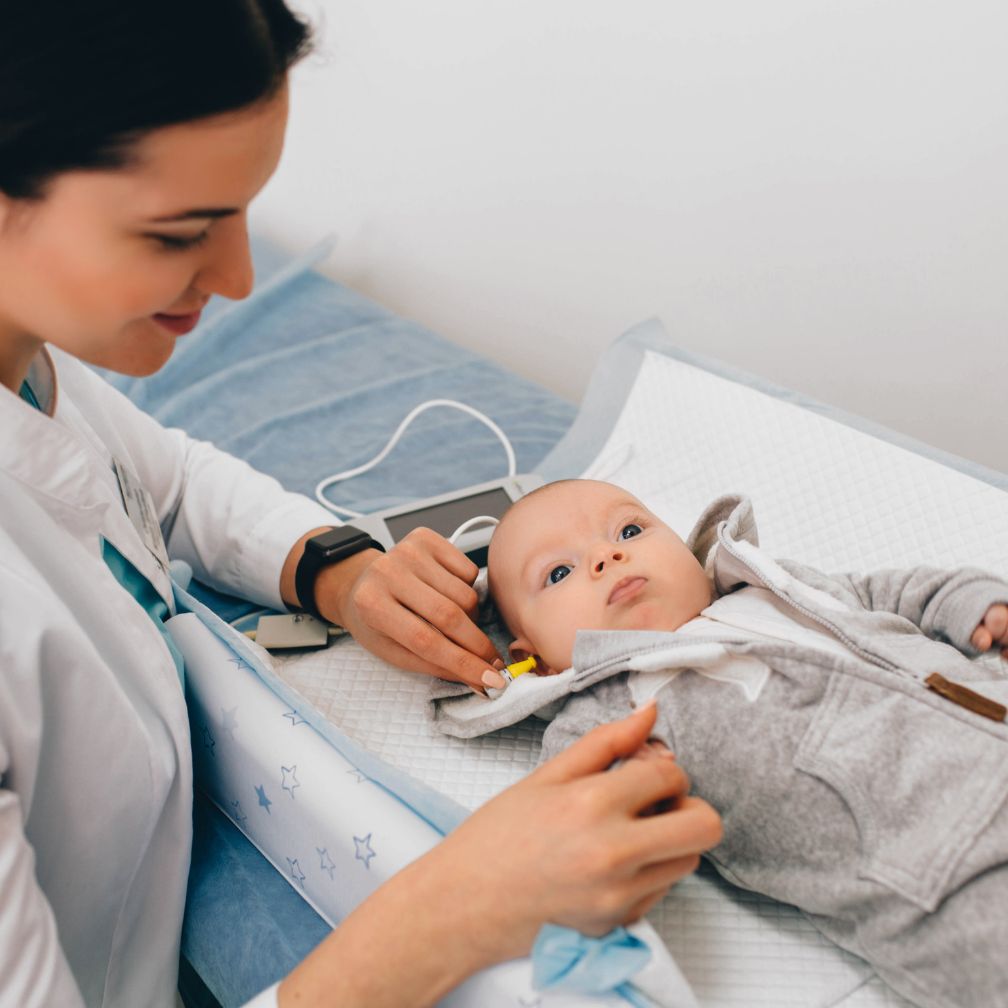
For mothers and fathers of newborns, receiving news of an infant’s hearing impairment brings considerable anxiety and dread. The positive takeaway remains that through the use of early evaluations and supportive care, infants experiencing hearing loss will easily succeed. Indeed, these children can build key verbal abilities, interactive skills, and solid bonds within their environment, leading to a vibrant, rewarding life!
Two of the most effective tools for supporting infants with hearing loss include custom hearing aids and cochlear implants. Inside this overview, we outline their operational methods to assist you in choosing the most effective pathway for your infant.
Analyzing Infant Auditory Deficits
Hearing impairment across infants typically comes from several distinct health factors, such as:
- Spontaneous genetic variations (even across lineages missing hearing loss history)
- Documented prenatal viral exposures including cytomegalovirus (CMV) or rubella strains
- Complications during birth, such as lack of oxygen or prematurity
- Select ototoxic pharmaceuticals utilized in dedicated newborn intensive units
Which phase matters most? Early diagnostic testing. For this reason, infants across the United States undergo mandatory hearing screening prior to hospital discharge. Pediatric hearing experts strictly observe the established “1-3-6” care guideline:
- Preliminary auditory screening administered prior to 1 month of life
- Definitive medical diagnosis established prior to 3 months of age
- Therapeutic intervention (employing wearable technology or developmental therapy) started within 180 days of birth
Achieving these critical milestones offers infants the best chance for healthy speech, language, and brain development. Should you desire expert guidance regarding these evaluations, your child’s pediatrician will gladly advise you!
Deploying Hearing Aids for Newborns
For young children showing mild to severe auditory impairment, programmed hearing aids generally provide the preferred initial approach. These compact, external instruments enhance environmental audio, helping babies process spoken dialogue and everyday sounds more distinctly.
Certified pediatric-grade hearing devices stand as:
- Fully safe and suitable for young babies merely weeks past delivery
- Crafted with cushioned, protective ear molds that adapt as the infant matures
- Equipped with tamper-resistant battery latches and custom pediatric safety options
- Expertly programmed by a dedicated pediatric audiologist to match your child’s hearing profile
During physical development, these devices demand ongoing professional tuning to guarantee physical comfort and optimal performance.
Advanced Surgical Solutions: Infant Cochlear Implants
If a baby experiences severe to profound sensorineural impairment with limited benefit from wearable hearing aids, a cochlear implant is often recommended. Unlike external acoustic hearing aids, modern cochlear implants:
- Need a targeted surgical procedure for final insertion to enable direct neural stimulation
- Directly bypass compromised areas inside the inner ear
- Convert surrounding audio into precise electrical signals that excite the acoustic nerve pathways directly
Surgically fitted cochlear implants serve as:
- Fully approved by the FDA for pediatric patients aged 9 to 12 months and older
- Highly successful whenever integrated with comprehensive speech therapy and robust family support
- Advised strictly following exhaustive clinical assessments by an expert audiologist and ENT surgeon
That multi-step journey involves temporal bone imaging, objective hearing assessments, and setting realistic expectations for future communicative success.
Hearing Aids or Cochlear Implants: Distinguishing Features
- Mild to severe hearing challenges suit Hearing Aids; Severe to profound hearing loss requires Cochlear Implants
- Non-Invasive external fitting: Hearing Aids; Surgical internal implantation: Cochlear Implants
- Traditional acoustic amplification: Hearing Aids; Direct electrical signal generation: Cochlear Implants
- Intervention starts in early infancy: Hearing Aids; Access starts at 9-12 months: Cochlear Implants
Hearing Aids vs. Cochlear Implants: Final Thoughts
In the event your infant receives a hearing loss diagnosis, you can rely on excellent technological options and dedicated expert support. With active assistance from pediatric hearing professionals, many children go on to develop language skills that are on par with their peers.
Whether your baby benefits most from custom hearing aids or a cochlear implant system, early action can make a lifelong difference.
Have questions about your baby’s hearing health? Reach out to our specialists today for a complete diagnostic review and tailor-made care roadmap.